 Cindy Morse
What is blue lotus?
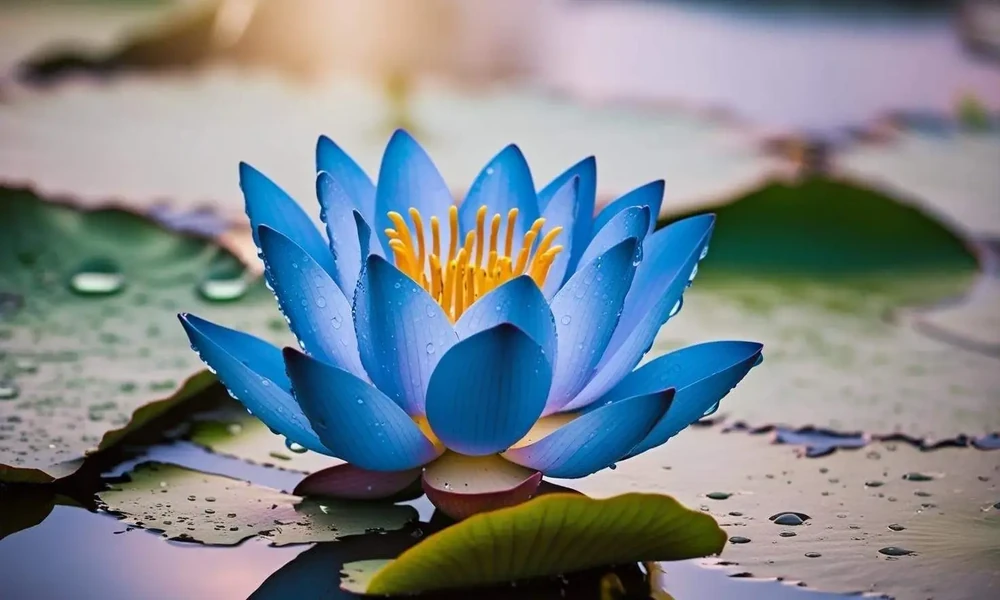
A blue lotus is actually a water lily and not a lotus at all. People have used it for centuries, mostly for tea or to smoke in small amounts, along river deltas and in humid regions with standing water. Nothing intense, just a mild calming effect that’s kept it around this long. Some packaging carries a shop now label right near the ingredient list, though that’s marketing, not chemistry, and has zero bearing on what the plant does once it’s actually consumed.
Two compounds get mentioned constantly in write-ups about this stuff, nuciferine and apomorphine, and both show up in pretty small amounts depending on harvesting and drying. Neither one has regulated the way THC or CBD is used these days. That’s a big part of why blue lotus… appears on supplement shelves without much paperwork or fuss attached to it.
Why is it trending now?
Social media grabbed onto this over the last year or two, mostly through sleep and wellness content, where people frame it as a softer alternative to melatonin, something gentler than the stronger stuff. That angle caught on fast, especially with people already messing around with herbal teas and tinctures as part of some nightly ritual.
- Curiosity about ancient or historical plant use spiked alongside this.
- Sleep-focused creators started weaving it into their routines online.
- More brands added it to existing supplement lines as demand grew.
- Loose regulation meant smaller brands could launch products fast, no red tape slowing them down.
None of that actually proves the plant works the way people claim. It just explains why way more people know the name now compared to five years back.
How is it typically used?
The most popular method is to use tea. Take a cup of hot water and steep dried petals in it for a few minutes. It can be smoked to hit faster, though it is less predictable than tea. People now have a concentrated version available for drinking or swallowing straight under the tongue in the form of extracts and tinctures. For those who don’t want to spend time brewing a pot, these skip the whole ritual entirely.
Does it actually work?
The evidence is thin here, mostly stories people tell online rather than anything backed by solid research. What little exists points toward a mild sedative or mood lift for some users, nothing close to prescription strength, not even close to melatonin at a higher dose. Reports swing wildly person to person. Some feel noticeably relaxed within twenty to thirty minutes. Others feel absolutely nothing, even after trying it several times, which honestly tracks given how mild and understudied this stuff is. Dose, how it’s prepared, individual sensitivity, all of it matters somehow, though nobody’s really pinned down exactly how much weight each factor carries.
People are taking it everywhere online, but little exploration has been done in a real laboratory setting, so nobody can be sure what actually happens biologically. Today, the gap between attention and evidence is most honest.